
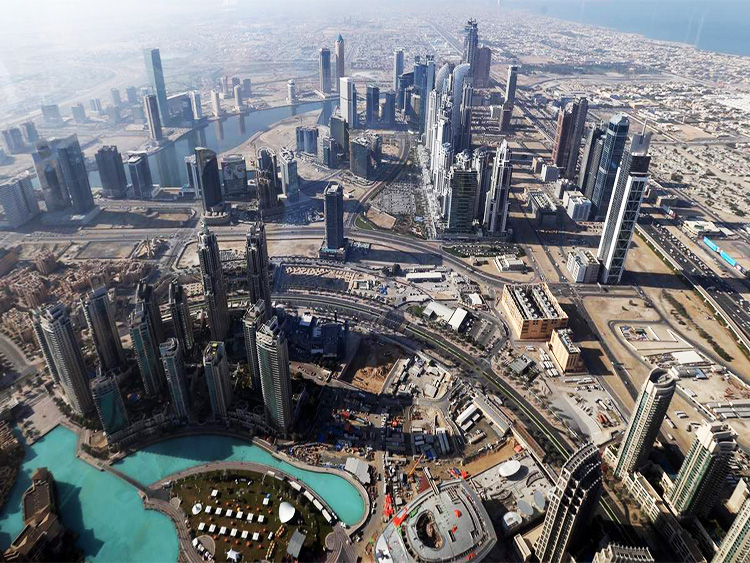
It’s now or never for property buyers in Dubai

The current momentum in sales activity in Dubai is driven by a larger proportion of end-users than before, particularly
first-time buyers.
(File photo)
While off-plan was king in the Dubai real estate market in 2017, secondary market sales are likely to take centrestage next
year, say market stakeholders. Buyers are unlikely to see too much of the sales incentives and attractive payment plans
that were rolled out by extra-generous developers this year.
“The main trend we will see in 2018 is that the secondary market will overtake the off-plan market in terms of deals done.
With more handovers coming up of affordable housing, there will be a huge buzz and demand. What a lot of buyers will
be waiting for is handover so they can secure 75 per cent finance and move forward with a purchase. Off-plan will still
have a big part to play in the market, but after the acceleration in 2017 of this sector, we can expect some drop off in what

is announced or launched, which is a natural way for the market to go,” says Lewis Allsopp, CEO, Allsopp & Allsopp. Off-
plan projects now account for approximately 78 per cent of total real estate market transactions in Dubai.

It will be hard to see the off-plan market perform to the same extent as it did in 2017. Developers will find it difficult to
sustain the pace of launches, offers and incentives as this year.
“There are some very exciting projects coming to the market. Prices have stabilised and now is the time for buyers to
strike. We will see far more transactions happening in the secondary market than we did in 2017,” observes Myles Bush,
CEO, PH Real Estate .
Supply coming up
According to the Property Monitor Supply Tracker, over 40,000 residential units are expected to be completed in Dubai in
2018. With so many units expected for completion in 2018, this may put pressure on rent and sales prices, in particular
the secondary market.
“There are just as many good opportunities now in the secondary market as there is off-plan. Developers very rarely
lower their prices to fall in line with reduced market trends while the secondary market is more driven by sentiment and
emotion. Because of this, I believe there are just as many ‘good deals’ to be had in the secondary market,” adds Bush.
Affordability of property sales prices is likely to be a recurring trend in 2018. “The current momentum in sales activity is
driven by a larger proportion of end-users than before, particularly first-time buyers, who are entering the market
enthused by lower prices and encouraged by attractive payment plans offered by some developers. This trend is expected
to continue,” says Manika Dhama, senior consultant, Cavendish Maxwell.
Fence-sitters are advised to make up their minds on property investment in 2018 as several value-for-money deals
abound.
“As we approach 2020, the government will inject money into the market in order to finish Expo-related projects [the
exhibition city and the infrastructure surrounding it]. This means a lot of companies will hire personnel and buy ready
properties in order to create an asset for the shareholders. We will also see a lot of demand from expatriates who have

been watching prices dropping to an all-time low and putting the down payment on their dream homes. It is going to be a
‘now or never’ phenomenon,” reckons Arash Jalili, CEO, Unique Properties.
“Now is an excellent time to invest. It’s still a buyers’ market and buyers should only look at good value-for-money
projects. However, if you are waiting for prices to drop further, you are likely to wait a very long time. In addition, if you
are taking a two to 10-year vision, it’s far better to get on to the property ladder than spending money on rent,” informs
Bush.
2018 could be the perfect time to get in to the property market ahead of any price increases in the run-up to the Expo.
“Over the next few years, the population will increase above its current rate of approximately five per cent a year with all
the jobs the Expo creates. With this will come an increase in demand and, therefore, it’s reasonable to expect some
upturn in the market. One of my favourite sayings with regards to real estate is ‘don’t wait to buy real estate, buy real
estate and wait’,” explains Allsopp.
More rent drops?
After a marginal decline in 2017, house rents are expected to fall further next year with more supply being added to the
market.
“Residential supply, particularly from previously delayed projects, will be handed over, mostly located within the E311
corridor which is expected to put further pressure on rents,” says Haider Tuaima, head of real estate research, ValuStrat.
“In 2018, rents are going to drop further, which will result in a lot of movement in the rental market. This is very healthy
for the economy because the working category of the Dubai population [almost 85 per cent] will be left with more money
to spend. As more money is spent in other segments of the industry [such as restaurants and retail], more businesses will
be opened and that, in turn, brings more working force to Dubai. We will see an increase in the rental market by the end
of 2018 as low rents will attract a lot of people from other emirates who wish to escape traffic congestion,” points out Jalili.

Meanwhile, tenants are also likely to benefit from being able to pay their rents with more cheques. During 2017, the
number of cheques increased, with four cheques becoming the norm and in some areas six and even 12 cheques. “In
December 2016, one cheques made up 40 per cent of all transactions and four cheques made up 25 per cent whereas till
date in December 2017, one cheques made up 25 per cent of rental agreements and four cheques make up 48 per cent of
agreements. In 2018, this trend is expected to continue, with the number of cheques increasing beyond four,” forecasts
Dhama.
“The typical person or family that lives and works in Dubai are not millionaires and it’s good to see the housing market is
adjusting to account for most of the population. This is exactly what is needed in Dubai,” adds Allsopp.
Regulations to look out for
The implementation of five per cent value added tax (VAT) is the biggest regulatory change on the anvil next year.

“I don’t think this will have a significant impact on the real estate market. If anything, this should give increased
confidence in the market as Dubai needs to charge some form of tax to progress and keep developing as a country and
five per cent VAT is still way below what people would be paying in their home countries. In terms of real estate, the
purchase price and the four per cent transfer fee are not applicable for VAT. So, while there will be extra expenses, it
won’t have too much impact. The transfer fee increasing from two per cent to four per cent at the end of 2013 was a
much more costly introduction,” Allsopp concludes.
[email protected]
Deepthi Nair I cover all things related to real estate in the UAE. Working as a print journalist in Dubai since 2008, I have
reported on all the flashy new projects in town. Dubai’s passion for setting new records continues to amaze me. I love to
do stories that strike a chord with the average expatriate in the UAE. If you have any news related to your community or

rents, you know who to get in touch with at Khaleej Times. When I am not working, I travel, catch up with friends, mall
trawl, catch up on movies, explore new places in town or just unwind in a spa. Originally from India, I have been a
journalist for more than 11 years. Language has been my forte right from school. That’s me in a nutshell Copyright ©

Read More

UAE realtors upbeat about growth

After a flat 2016, this year has been more heartening for the UAE real estate sector. Projects are coming to completion,
buyer enquiries across the board are up, and Expo 2020 is around the corner. In terms of trends, experts see a noticeable
shift to the off-plan sector, and projects are generally better in terms of quality.
“It looks like both investors and end users don’t mind the wait for these projects to be completed, which could be
anywhere between the end of the year to two years,” says Brigitte Tenbergen, Luxury Sales Specialist at Dubai real estate
firm Luxhabitat. “The new units to be delivered appeal to a mass audience; they have well-thought out layouts.”
Projects to watch
Among new projects to watch in 2018, Tenbergen points to the Alef Residences serviced by the W brand, and the One
Palm luxury apartments, both on the Palm Jumeirah.
Abu Dhabi has had a mixed performance this year, but locations such as Al Khalidiya and Mohammad Bin Zayed City have
bucked the trend of poor demand and rental pressure. These residential neighbourhoods along with Muroor are the best
performers, according to recent data from Chestertons. Khalifa City is another area favoured by cost-conscious tenants.
There are big things happening though in the northern emirates, which are a focus of interest for GCC investors due to
perceived good returns. In Sharjah, developer Arada is drawing interest with the emirate’s largest-ever mixed-use project.
The Dh24 billion Aljada development will house around 70,000 people over 2.2 square kilometres.
Ras Al Khaimah is the market to watch in 2018. Most experts are positive in terms of returns for investors in the emirate,
with Asteco highlighting that Al Hamra reported yields of 7-8 per cent per year on town houses and villas and 8-9 per cent
on smaller apartments. Insiders predict an 8-10 per cent return on beachfront properties such as Pacific.

Interestingly, investors who moved to RAK as a second option to Dubai and Abu Dhabi have found it to be a value-for-
money destination with comparable benefits.

Overall, it has been a positive year for UAE developers. Revenues came in higher for Damac Properties, for example, at
Dh5.8 billion over the first nine months, versus Dh5.12 billion a year ago. Damac is keeping a good pace on the delivery
side, handing over 1,923 homes, including 852 units outside the UAE.
Despite the overall perky sentiment, it is no secret that a price adjustment occurred over 2017, with market rates

dropping since the start of the year. However, insiders are confident this won’t continue in 2018.
More buyers
“In my opinion, at the start of this year prices had risen too sharply and as all marketplaces are cyclical it was inevitable
there was going to be an adjustment,” says Myles Bush, CEO at Dubai’s PH Real Estate . “As a business, since the end of
summer, we have seen an increased number of buyers, which shows a very positive sentiment.”
Bush says that Dubai Marina, Jumeirah Lake Towers (JLT) and Jumeirah Village Circle (JVC) have been very active in 2017
and had provided the most business for his company in Dubai.
Raj Sahni, owner and chairman of the conglomerate RSG International Group, feels the current UAE real estate market is
a bit quiet, but is ripe for investment. “It offers some great avenues for smart investors and promises to yield good
returns,” he says. “Anyone with a keen sense of real estate and smart enough to spot opportunities are investing in the
market. Its past performance and future prospects are enough to capture the attention of investors the world over.”

Read More

PHOENIX HOMES RISES UP TO SET NEW REAL ESTATE BENCHMARK IN DUBAI

PHOENIX HOMES RISES UP TO SET NEW REAL ESTATE BENCHMARK IN DUBAI

  • Highly experienced Dubai real estate experts form new company which breaks the mold
  • Phoenix Homes promises professionalism, transparency and 80% commission for brokers
  • Ground-breaking commission model is a regional first, designed to attract mature, reliable, experienced brokers
  • Phoenix Homes aims to be an elite brokerage, with elite brokers

PHOENIX HOMES is a new hybrid estate agency already taking the market by storm, the brainchild of property experts Myles Bush, Martin Hyre and Padraic Hickey. Phoenix Homes is a revolutionary real estate company, offering a brand-new approach to business.

With a view to shaking up the stale status quo, Phoenix Homes has taken lessons from the pandemic and offers brokers complete freedom to work when how and where they like, with an 80% commission model. This extraordinary model goes against the regional norm – splitting commission 50/50 between the agent and the agency.

And while some US models charge brokers for desks and marketing, Phoenix offers workspace for those who want it, and leaves each broker to decide if they want to contribute to marketing of their property portfolio.

And on the first day of trading, Phoenix Homes already has nine highly experienced, mature brokers, a professional admin team and a 3,000 square feet office in Barsha Heights.

Myles explains: “We sat down and created the dream agency for us. As individuals, we all broker transactions, we’ve all got our own network, and we sat down around a table and decided what we wanted from an agency. The higher commission model is known in America, but no one is doing it here. We’ve fine-tuned it and are so excited to be bringing a fresh new approach to the business. The market has shifted, the world has changed, and we want to create a new sort of company that respects and acknowledges that.

“A friend said to me the other day, ‘all the other real estate companies are like schools, where you are told what to wear, when to turn up, what to say and what to do.’ What we are building is not a school, it’s more like a University, you know.”

Given the experience of Myles and his partners – both long term friends and fellow real estate brokers – the company already carries clout in the local markets.

Business partners Martin Hyre and Padraic Hickey come with a wealth of experience. Martin has 29 years of agency experience, 10 of which are in Dubai, while Padraic boasts 10 years of Dubai real estate experience

Martin picks up the story: “All three of us were in a position where we reached the part of our careers where we wanted something different. We wanted a better work life balance than we previously had. We were looking for something which was going to give autonomy back to brokers, and so rather than actually go off and do things independently, we are three really good friends and we decided to do it together. So, we just rebooted, to form Phoenix Homes.”

The vision of a new kind of real estate brokerage came easily to the innovative trio, with Martin continuing: “Why did we pick the name Phoenix Homes? We want brokers to rise to the pinnacle of their careers, and we want them to have everything available to them to be the best they possibly can in their lives, and they’re not going to be able to do that, with other business models that give a 50/50 commission split. 80% of the commission gives them the best possible chances to fill up their bank accounts, retire early, and just have a beautiful work life balance.”

That work/life balance can only come with experience, a bulging contact book and the maturity to manage your workload. Junior brokers do not fit in the Phoenix Homes model. As Myles puts it: “If you’re a new broker who wants training, and to be told what time to start and end your day, what to wear and say, then we are not the agency for you.”

Bush says joining Phoenix Homes is akin to starting your own agency, without all the capital required. “We need to trust our brokers to get on with it. They will be judged on performance alone. We won’t offer training or expect them to be in the office 9-5 – although, of course, the office and the admin staff are there for when they’re needed. I’d go as far as saying we are looking more to recruit dynamic, entrepreneurial businessmen and businesswomen rather than just brokers.”

And mature, heavyweight brokers joining the agency can choose to spend some of their commission on promoting their portfolio via Phoenix Homes’ channels if they wish. They can also promote their properties via whichever methods they know work best for them, without paying money into the firm.

As the first agency to adopt a clear cut, uncomplicated 80% commission model, Padraic says he’s confident the agency will grow rapidly, organically, and aims to attract 20-30 brokers by year end.

Padraic says: “Our model works on trust. On finding mature brokers, who know exactly what they are doing, and how to generate sales and lettings. Anyone who knows me knows my style wasn’t to be chained to my desk all day. I’ve always preferred being out and meeting people. Our clients will trust us because we are all highly professional and experienced – so it doesn’t matter what hours we keep.”

Phoenix Homes will offer sales and lettings of both residential and commercial properties in Dubai, with plans to swiftly open a UK office to assist in international property negotiations.


Source: https://uaenews247.com/2021/05/17/phoenix-homes-rises-up-to-set-new-real-estate-benchmark-in-dubai/

Read More

A 120,000 square foot plot picked up at Meydan

Dubai: The Meydan area is turning into an investment hot spot — the master-development recorded the biggest land deal
in the year to date, according to PH Real Estate , a brokerage firm. The plot measuring 120,000 square feet was sold to an
Emirati buyer, who plans to build three custom-designed mansions for members of the family. The seller was the
businessman Kamel Alzarka.
The land, which sits directly in front of the golf course and central lakes, is probably the largest residential freehold plot in
Dubai. Myles Bush, CEO of PH Real Estate , which brokered the deal, said: “There is nothing of this size that we know of in
Emirates Hills or on the Palm Jumeirah. These kind of high-profile transactions have a positive knock-on effect to the rest
of the market.” (Last year, PH Real Estate brokered the sale of a Dh53 million residential property in Emirates Hills.)
The Meydan district and the MBR City of which it is a part has been witness to a slew of high-profile deals since the start of
the year. Demand has also been helped by the launch of works for the Meydan One Mall, one of the biggest shopping
destinations in the works in Dubai.
For information on the real estate sector, within the UAE, please visit our sister

Read More

Dubai property prices record highest monthly jump in seven years

Property prices in Dubai rose 2.5 per cent in April recording the largest single-month increase since March 2014 as the economy recovers from the coronavirus pandemic-driven slowdown, according to a new report.

The average property price in the emirate climbed to Dh895 ($244) per square foot last month from Dh873 per square foot recorded in March, the Property Monitor monthly market report said.

“Since the end of 2020, prices have steadily recovered to record gains of 9.5 per cent in the last six months,” the report said. “However, this strong performance is not uniform across all communities, with some areas still displaying price weakness.”

The strong double-digit increase recorded in some communities is likely to slow in momentum “as the recovery switches to a more sustainable pace across Dubai as a whole”, according to the report.

Property prices in the UAE are expected to stabilise in 2021 as the economy bounces back from pandemic headwinds, driven by government initiatives to spur growth.

New programmes such as visas for expatriate retirees and the expansion of the 10-year golden visa scheme to attract foreign professionals to the UAE are also expected to support the local real estate market.

Dubai’s total transaction volumes in April stood at 4,879 deals, recording a year-on-year increase of 167.4 per cent and a 6 per cent jump on a monthly basis.

Capital values in Abu Dhabi’s residential investment zones rose 4.1 per cent in the first quarter, according to ValuStrat. Ravindranath K / The National

“Continuing the recent trend, there was a good volume of transactions in the high value segment of properties worth over Dh10 million. In all, 90 transactions were recorded for this segment, representing a month-on-month growth of 6.7 per cent,” the report said.

Some 81 villa transactions above Dh10m have been recorded on Palm Jumeirah so far this year, compared to 54 across the whole of 2020.

Dubai also recorded 1,926 off-plan transactions in April, up 13.9 per cent on a monthly basis and 46.5 per cent year-on-year.

“Betterhomes recorded the highest number of sales transactions on record for the month of April, despite it coinciding with the beginning of Ramadan,” Richard Waind, group managing director of brokerage Betterhomes, said.

“The extreme low interest rate environment and mortgage availability continues to drive healthy domestic end-user activity, and investors are returning with confidence, buoyed by recent capital gains.”

Wealthy Europeans clients are also buying the property in the UAE, he said.

“The lifestyle, safety and business-friendly environment are key pull factors and we think the post-Covid tax bill in many countries will act as a key push factor.”


Source: https://www.thenationalnews.com/business/property/dubai-property-prices-record-highest-monthly-jump-in-seven-years-1.1231092

Read More
Latest News - Phoenix Homes Real Estate

Dubai businessman buys $14.4m(AED53m) Emirates Hills mansion

A Dubai businessman of Indian nationality has spent $14.4m (AED53m) on a mansion in high-end residential district
Emirates Hills. The 24,000 square foot villa, which overlooks a golf course, is located on a 39,000 square foot plot, which is
equivalent to more than half the size of a football pitch. It was found by the buyer on UAE-based real estate portal
propertyfinder.ae.
“Dubai’s real estate market remains one of the preferred options for the world’s ultra-high net worth individuals and the
leading choice for those from the GCC,” said Lukman Hajje, Propertyfinder Group chief commercial officer.
The deal, closed by PH real estate , reportedly set a record for 2016, according to PH chief executive Myles Bush. In the
same year, the median price of a villa in Emirates Hills was $9.8 (AED36m), making it Dubai’s most expensive
neighborhood.
Culture Village came second with the average villa price in the Creekside locale standing at $6.5m (AED24m), bolstered by
high demand for the Palazzo Versace properties.
Palm Jumeirah homes were advertised for an average price of $735 (AED2,700) per square foot, making it the priciest area
by the. Villas in Emirates Hills, which are bigger and command a higher actual selling price, came in at $731 (AED2,686)
per square foot. Downtown Dubai came third with $671 (AED2,467) per square foot put it third.

Copyright 2017 ArabianBusiness.com – ITP Digital Ltd. Provided by Syndigate Media Inc. All Rights Reserved

Read More

Dubai posts property deals worth Dh36b in four months

In terms of volume, April transactions were up 4.2 per cent compared to March and 0.6 per cent more in terms of value

Dubai’s real estate sector recorded 4,832 sales transactions worth Dh10.98 billion in April 2021, the highest value in four years, specifically since March 2017.

In terms of volume, April transactions were up 4.2 per cent compared to March and 0.6 per cent more in terms of value. This brings the year to April total to 16,577 sales transactions worth Dh36.12 billion, according to the 14th edition of Mo’asher, Dubai’s official sales price index, launched by Dubai Land Department (DLD), in cooperation with Property Finder.

In April, 70 per cent of the total transactions were up to Dh2 million, while 23 per cent were between Dh2 million and to Dh5 million, 4.0 per cent were between Dh5 million and Dh10 million and 3.0 per cent above Dh 10 million.

While off-plan sales rose 12.9 per cent, the highest in 14 months, the month saw 60 per cent transactions in secondary/ready market segment and sand 40 per cent in off-plan category.

Apartment sales also accounted for 69 per cent of the total, and 31 per cent for villa / townhouse sales. When we look at the volume of transactions, the off-plan market transacted 1,934 properties worth Dh3.09 billion and the secondary market transacted 2,898 properties worth Dh7.89 billion. Comparing this to March 2021, the number of off-plan sales transactions in April increased by 12.9 per cent, the highest in 14 months and the secondary/ready property transactions decreased for the first time in 11 months by 0.92 per cent, said the report.

“Since the start of the pandemic, we have seen apartment prices decline. This is partially due to more affordable housing coming into the market, more supply of apartments completed, and an increase in demand shifting to villa/townhouses,” said the report.


Source: https://www.khaleejtimes.com/business/real-estate/dubai-posts-property-deals-worth-dh36b-in-four-months

Read More

Price drop in Emirates Hills presents new opportunities for buyers

Talking about Emirates Hills, that still remains Dubai’s most exclusive residential address, Andrew Cummings, co-founder and managing director of luxuryproperty.com gets a bit nostalgic. “I have a number of clients who fondly remember driving into the desert and seeing the flags placed on their plots, on which they then constructed their homes. Land is now scarce here. Instead, buyers are purchasing older villas and then demolishing them and rebuilding – a symbol of the ongoing demand for the area.”

One of Dubai’s earliest luxury villa communities, Emirates Hills is home to high net-worth buyers and investors. John Lyons, managing director of Espace Real Estate says, “Not only is the location on the doorstep of some of the region’s best lifestyle amenities, but the villas that sit within this exclusive gated community are some of the most visually impressive family homes that can be found anywhere in the world.”

Emirates Hills2
Emirates Hills, despite being one community, has a range of different villa stylesImage Credit: Supplied

So what do homeowners demand from properties here? Myles Bush, CEO of PH Real Estate that sold the largest ticket villa in Emirates Hills last year, says, “In the 13 years I have noticed several occurring requirements. Staff accommodation is a must. Privacy is also a requirement and a second kitchen is usually seen as a huge plus point.” Emirates Hills, despite being one community has a range of different styles and ambiances. You have the huge palatial golf course mansions of Sectors E and L, the tree lined streets of Sectors H and R and the lake view properties on Sectors P and W.

Leigh Williamson

The designs here are very personalized. “You will find basements with spas, cinemas and luxury style kitchens. There is actually opportunity at the moment to come in and buy a home, update it and have a lovely golf course community lifestyle at a price we have not seen before. The UHNWIs are typically looking for basements, car parking and large master suites and they ultimately want full golf course views,” says Leigh Williamson, Emirates Hills specialist at Luxhabitat Sotheby’s International Realty.

Andrew Cummings

“Buyer demand has now shifted to more contemporary homes and we are seeing more buyers either buying to renovate or holding off because they cannot find a property that suits their style,” explains Cummings.

Falling prices

Myles Bush

Bush admits it’s no secret that prices have dropped by more than 20 per cent within Emirates Hills over the last 12 months, and while this is not ideal for potential sellers, it does present opportunities for buyers. “Buyers who perhaps had a budget of Dh12-14 million were once looking at Hattan Villas and Palm Villas, can now take a serious look at entering Emirates Hills. I am a firm believer that all villas in Emirates Hills are sell-able, as long as they are priced correctly. Far too many times I have seen houses take more than a 12-18 months to sell because the listing agent has over promised and under delivered. If the price is right- it will always sell!”

Williamson agrees. “Price it out of the market and you will never sell it. Price it correctly and we will have it sold within an appropriate time frame. The hardest part is working with a seller and letting them know the actual selling price.”

Emirates Hills has seen similar price falls as the rest of Dubai, with average price per square foot dropping by 30 per cent over the past few years, says Cummings. “Prices now range between Dh1,000 per sq ft and Dh2,000 per sq ft, with land transacting around Dh750 per sq ft. Pricing varies hugely due to the varied style and quality of the villas, with many purchases being done by investors seeking to buy older homes and either redevelop them or demolish and rebuild altogether. The most expensive villa sale this year has been at Dh69 million.”

John Lyons

In recent years, prices in Emirates Hills have become more realistic than what it was in 2014, which has resulted in more transactions, says Lyons. “Lower pricing in the community has been well received by the market, with a general increase in demand from wealthy buyers looking for opportunities in Emirates Hills.”

New kids on the block

Given the value and scale of the properties available, Emirates Hills stands alone. “Areas like District One, Palm Jumeirah and Al Barari remain the closest competitors, all offering a slightly different lifestyle. Dubai Hills though looks to be shaping up to be a new hotspot with shell and core and ready mansions providing a more contemporary alternative to Emirates Hills,” says Cummings.

em hills4
Demand for Dubai’s most exclusive residential address remains strongImage Credit: Supplied

Lyons agrees that the “two obvious comparisons to Emirates Hills, with villas that fall within the same price bracket, are Palm Jumeirah and Dubai Hills, which are emerging as the new kids on the block for luxury real estate in Dubai.”

Source: https://gulfnews.com/business/property/price-drop-in-emirates-hills-presents-new-opportunities-for-buyers-1.1596005476362

Read More

Al Barari Properties Is Live

Welcome to Al Barari Properties.

We are super excited and proud to have partnered with the team at Phoenix Homes and look forward to continuing to build new relationships as the company takes on very experienced, like-minded brokers.

We have only been up and running now for a couple of weeks and already secured some great units for some very happy clients in ‘The Neighbourhood’.

The Neighbourhood is a new launch of studios, 1 bedroom & 2 bedroom apartments and duplexes. More details on those to follow, so stay tuned!

Read More

Low LTV ratio a tough barrier for homebuyers

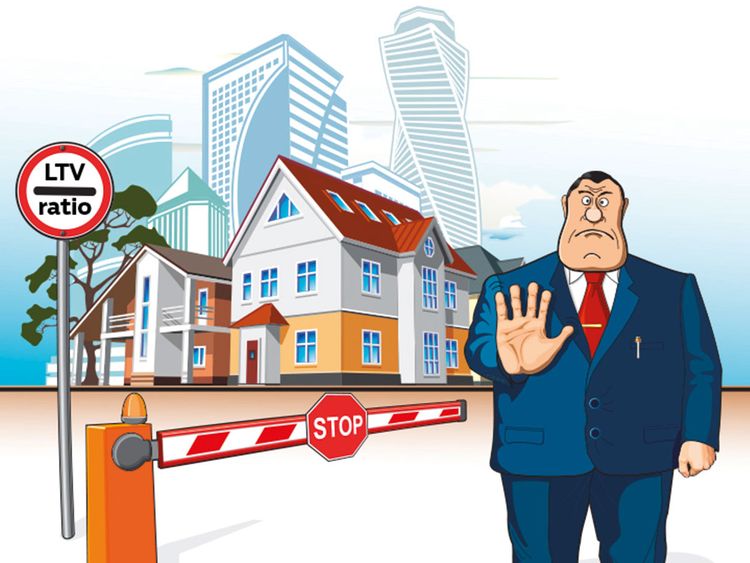
When purchasing property using bank finance in the UAE, a buyer will have to shell out at least 25 per cent of the price upfront, as per Central Bank regulations. Many property stakeholders believe this limitation is holding back a sizeable portion of potential homebuyers, and suggest that authorities should instead increase the loan-to-value (LTV) ratio to encourage first-time buyers.

Industry analysts generally agree this is a good idea, although some say a higher LTV, which essentially lowers the down payment to buy property, should not be the norm. Instead, an exemption could be made for first-time buyers. Another approach is to encourage other purchase schemes that are attractive to first-time homebuyers, such as rent-to-own options

Property Weekly talked with property experts on the key points to consider about the LTV ratio.

Increase liquidity

Mario Volpi, sales and leasing manager, Engel & Völkers

In 2013 the Central Bank introduced a maximum 75 per cent LTV rate to cool a potentially overheating market, and it achieved the desired effect. Six years on, there are calls for a reversal or at the very least a softening of this stance. If the LTV will be relaxed to say 85 per cent, this would be a very positive step for the secondary property market as there is a high demand, but would-be buyers are struggling to raise the required 25 per cent deposit. If the banks come up with a specific first-time buyer mortgage product, I believe this will create a more fluid market that would benefit all.

Raise affordability

Lewis Allsopp, CEO, Allsopp & Allsopp

There doesn’t need to be a widespread higher LTV ratio, but I do feel there is a definite need for a first-time buyer product. The buyer sentiment is there. For example, over the last few weeks in Jumeirah Golf Estates, the developer spread the down payment of 25 per cent over 18 months on a ready stock. As a result of this attractive payment plan, only one villa remains available in Redwood Park, and 60 per cent of Whispering Pines stock has sold. This is a microcosm of the market, showing that there is a desire in people to want to buy property in the city but, in some cases, the affordability is holding them back. Once we see movement in first-time buyers, we will see a domino effect through the market with a lot more activity, positivity and confidence.

Educate applicants

Fadi Nwilati, CEO, Kaizen Asset Management Services

A higher LTV generally increases the number of people who can enter the real estate market. However, we must not forget the reasons why LTVs were reduced a few years ago to the levels they currently are. If the authorities were to increase the LTV, it is essential that banks are more careful in their application review process to make sure that the mortgage applicant, particularly first-time homebuyers, can cover the mortgage payments. Banks must educate mortgage applicants to understand the various fees that accompany a mortgage. What will be more impactful to the market is having more rent-to-own products by developers. It is less risky and it may well be a smoother process for first-time homebuyers.

Retain expats

Myles Bush, CEO, PH Real Estate

I think if banks were to reduce the 25 per cent deposit to say 10-15 per cent, there would be a huge number of people who would bite the bullet — stop renting — and start looking to buy. If the banks were to lend this little bit extra, we would see a sharp increase in the number of people looking to purchase, which would inevitably mean fewer people looking to rent — this, in turn, may well reduce already-inflated rental prices. Helping buyers get onto the property ladder is not only a good thing economically, but it also helps with the retention of expats here in the UAE.

Know the risk

Rakesh Mirchandani, director, KGR Real Estate

In some countries, higher LTV ratio, grants and programmes are available for first-time homebuyers. Lower interest rates and higher LTVs are undoubtedly crucial factors to stimulate real estate transactions, but the latter carries significant risk. The lenders want to get their monies back along with interest. In the case of a default, the lenders will need to be able to sell the property considered as the collateral; hence, the LTV will determine the risk, and a higher LTV would mean that the property is less likely to pay off the loan. By keeping the LTVs lower, the banks want to make sure borrowers do not take out mortgages they can’t afford. Over the years, we’ve seen an increase in buyers taking up fixed interest rates in anticipation of the rise in interest rates. This can help and motivate renters to buy and move into their own property. This way they would make a lesser down payment, and it would help with their cash flow. Also, it can offer a higher percentage of return on their equity/investment when the property prices increase.


Source: https://gulfnews.com/business/property/low-ltv-ratio-a-tough-barrier-for-homebuyers-1.64219568

Read More